This article contains affiliate links. As an Amazon Associate, I may earn from qualifying purchases.
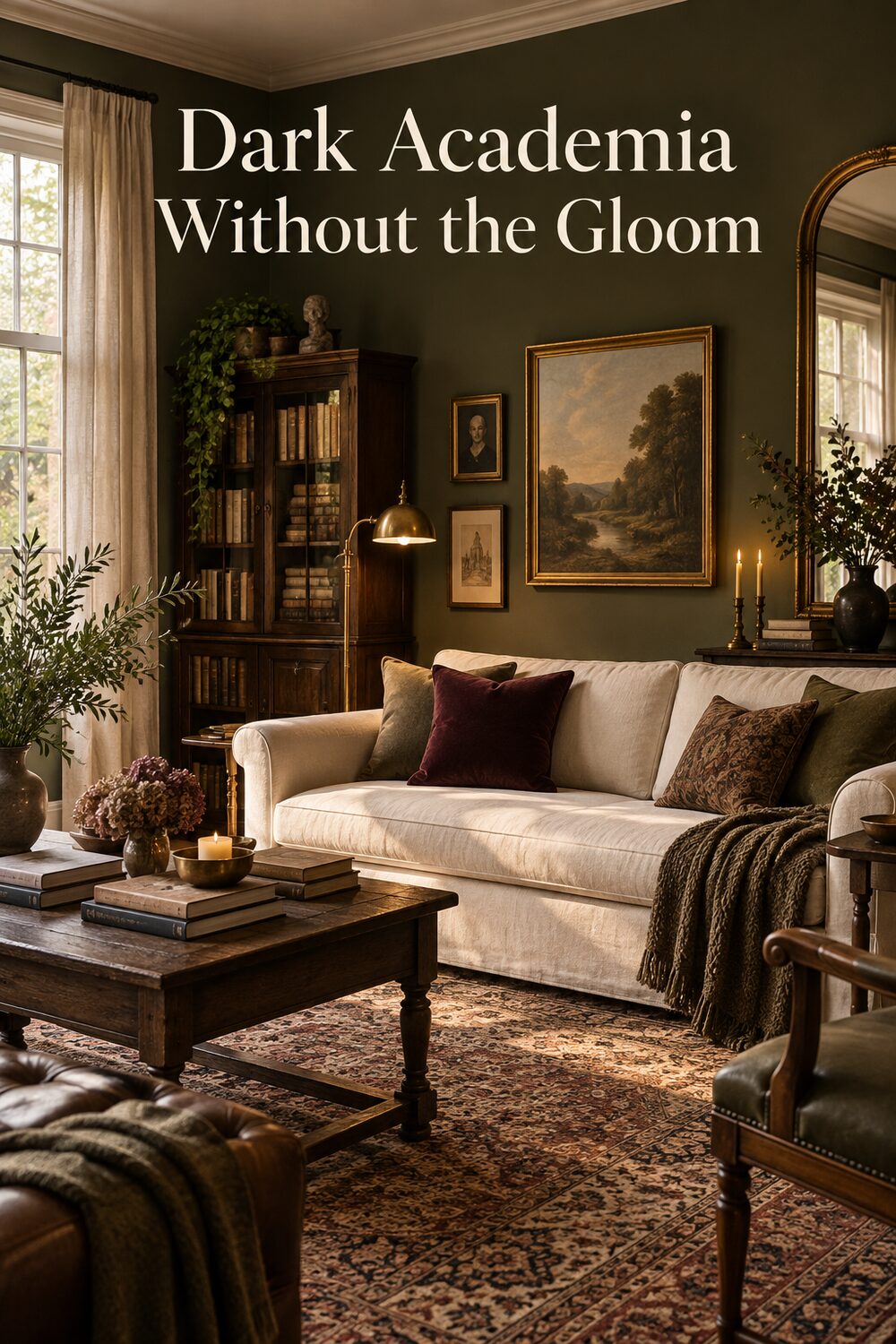
Dark academia living rooms are meant to feel intimate, literary and collected. The problem is that deep paint, dark wood, heavy textiles and low lighting can quickly combine into a room that feels smaller and gloomier than intended.
The solution is not to remove the mood. It is to create contrast. A successful room pairs shadow with reflection, visual weight with softness, and old-world character with enough open space to breathe.

1. Choose One Dominant Dark Element
Decide where the room’s depth will come from: the walls, a large wood cabinet, a leather sofa, or a richly patterned rug. When every large surface is dark, the individual pieces disappear into one another. One dominant element gives the eye somewhere to begin.
If you love deep olive or charcoal walls, balance them with lighter curtains and upholstery. If the furniture is dark, consider warm cream, mushroom or parchment walls.
2. Use Warm Neutrals Instead of Bright White
Pure white can create a hard break against dark wood and jewel tones. Warmer neutrals—ivory, linen, putty and parchment—soften the contrast while still reflecting light. These shades keep the room atmospheric without making it feel theatrical.
3. Add Reflection Strategically
A mirror placed opposite or adjacent to a window can send daylight deeper into the room. Choose a frame with aged brass, dark wood or antique-inspired detail so the practical solution still belongs to the aesthetic.
Browse antique-inspired gold mirrors on Amazon. Before ordering, confirm the dimensions on the wall rather than judging scale from the product photograph.
4. Build Three Layers of Lighting
Dark rooms need more than a stronger bulb overhead. Aim for three layers: ambient light for the room, task light near a reading chair, and accent light for art or shelving. Several modest sources usually feel warmer and more natural than one extremely bright fixture.
- A floor or table lamp beside the main seating
- A picture light or sconce near artwork
- A low candlelike source on a console or mantel
Browse antique-brass floor lamps and cordless picture lights.
5. Mix Materials, Not Just Colors
Dark academia becomes flat when every object is brown wood. Mix polished and worn surfaces: linen beside velvet, leather beside wool, brass beside pottery, and smooth glass beside old books. Texture creates depth even when the palette remains restrained.
6. Make the Art Feel Collected
A single oversized piece, a small salon-style grouping, or a pair of botanical prints will feel more intentional than filling every open wall. Look for landscapes, portraits, architectural drawings, maps and botanical studies. Use frames that relate to one another without matching perfectly.
Browse vintage-inspired botanical wall art.
7. Leave Breathing Room
Dark academia is often described as maximalist, but maximalism still benefits from editing. Leave part of the coffee table clear. Allow space between framed pieces. Keep one shelf sparse. These pauses prevent the room from feeling like a themed set.
An Apartment-Friendly Formula
Without painting or replacing furniture, use a traditional rug, one burgundy or forest-green textile, a brass lamp, framed art and a stack of books you actually read. The character comes from repetition and material—not permanent construction.
Shop the Dark Academia Living Room Elements
The Balance to Remember
The room should feel moody because of its depth and atmosphere—not because you cannot see. Keep the history, texture and rich colors, then introduce enough warm light and pale surface area to make the room welcoming.
If you are applying the look to a workspace, visit Create a 1980s New York Banker Home Office Aesthetic.